Data is the one moat you cannot rent
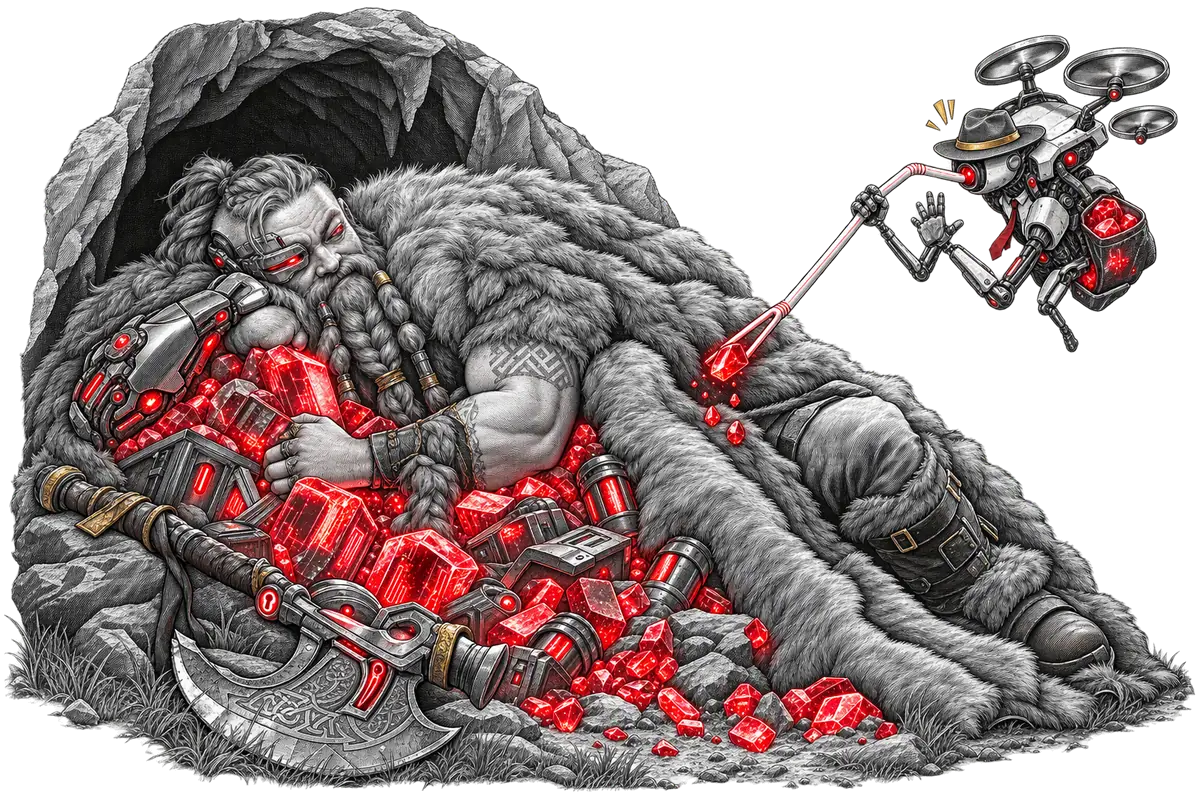
Everything in the AI stack is getting cheaper. Models that needed a vendor contract a year ago now fit on a single server. Compute can be rented by the hour. Software — more and more often — can be rewritten in a week. One thing does not get cheaper, because it cannot be bought: your company’s history, written down as data.
A moat that compounds
Every order, complaint, quote, customer email and “let’s make an exception” decision is a trace of how your business actually works. A competitor can copy your offer, your price list and your website. They cannot copy ten years of answers to which customer pays on time, which supplier runs late and which complaint ends with a lost account.
Until recently, that data mostly sat there. Its value was theoretical, because using it took an analyst, a warehouse and months of work. AI-native systems change the economics: a model can read a customer’s history before a call, compare a new complaint with a thousand earlier ones, or notice that an ordering pattern has just shifted. Data stopped being an archive. It became raw material.
The problem: your data lives somewhere else
In a typical company the customer’s story is smeared across the CRM, the invoicing system, the helpdesk, a dozen inboxes and three spreadsheets. Each piece lives inside a vendor’s product, in the vendor’s schema, behind the vendor’s API — with limits, pricing and terms the vendor can change.
So the raw material your advantage is supposed to stand on is available on the terms of someone who is building AI features on that very same data. Notice who gets the “smart customer summaries” first: you, or the platform that sells them to every one of its customers at once?
What an owned data layer looks like
This is not about heroically building everything yourself. It is about reversing the direction of the dependency.
- One place that is yours. A database or warehouse under your control that applications write to and read from — instead of data locked inside each application separately.
- A schema described in plain words. If understanding the export needs the vendor’s UI, it is not an export. Tables and fields should have names a new hire can follow.
- Continuous sync, not a one-off export. Data from the tools you still rent flows into your store as it happens. The tool can then be replaced without the company losing its memory.
- Events, not just states. Record what happened and when, not only what a record looks like today. A model learns from the history of change, not from the last frame.
- Permissions set on your side. Who can read what — including which agent — is decided by you, in one place.
What to do on Monday
Start with an inventory: list the systems where data about customers, orders and money lives. For each, write down two things — whether you can regularly pull the full data, relations included, and whether the contract lets you do whatever you want with it.
Then pick one process where AI would make the biggest difference and build its first data path into your own store. One process, done properly. The rest comes easier, because that first path forces schema decisions that will stay with you for years.
The uncomfortable part
An owned data layer is a discipline, not a purchase. Someone has to watch quality, backups and the sync that quietly breaks in August. That is a real cost.
But it is the only cost in the stack that turns into an asset over time. You pay for a server and the server ages. You pay for a model and a better one replaces it. You pay for data once, in discipline — and every further month of history makes it more valuable. That is a moat worth having on your side of the walls.
- data
- sovereignty
- architecture
- advantage